Building Self Trust Through Small Daily Practices

Our beautiful practice space at our next retreat: Autumn Equinox Retreat
Why is it so easy to trust other people but so difficult to trust ourselves?
There is this idea that other people have already been there, done that, and can be more useful to us than simply tapping into our own inner knowing.
& I get it, it’s because that “inner knowing” thing sounds complicated, a little woo-woo, a little out of reach. But this inner voice is a central piece in the practice of embodiment and somatics.
Self trust isn’t something that suddenly develops overnight. It’s not something we’re simply born with either. It’s built through repeated experiences of following through with yourself. Keeping your word to yourself. Simply put: doing what you said you’re going to do.
If you’re constantly overpromising to yourself or to others, it might be time to sit down and look within.
Building trust in yourself does not mean that you always make the right decision. It’s that you trust your ability to recover from failure, and learn and grow in the process of doing so.
It’s believing (and proving) that you’ll continue to show up for yourself when things get difficult, not just when everything is running smoothly.
We can start by gravitating towards difficult practices that expand our window of tolerance for discomfort. The practice about moving towards the things that make us curious, but also a little uncomfortable, perhaps a little scared.
Cold plunges, yoga, breathwork - these are all things that push us closer towards the edge and allow the space to notice what is going on inside our heads so that we can let go of the loops that aren’t serving us.
You start to notice the quality of your inner voice. Is she kind? Harsh? Judgemental? Fearful? Obsessive? Loving? Understanding? Compassionate? The noticing is the first step towards making a shift.
Sometimes our intuition is hard to hear because the inner critic is present and loud. The intuition is quiet and calm. There is never urgency around it. So it sits and simply waits until you create the space. To hear, to listen, to connect in.
Why Small Practices Matter
We tend to think that confidence comes from the big accomplishments, but I’ve actually found the opposite to be true. Moments that build confidence come in the form of failure, struggle, and showing up for yourself again and again in the dark when no one is really watching.
The brain grows new pathways through small, repeated actions. Eventually, the habit that felt like you were walking through the mud starts to feel like you’re skating. It’s easier to make the choice that leaves you feeling good rather than the one that feels temporarily good, then haunts you later.
It’s about creating the evidence that you can trust yourself. You can rely on yourself, AND you can find communities that are supportive in doing so. Other people showing up for themselves is wildly inspiring. I’ve made the pact to myself to be the least interesting person in the rooms I gravitate towards. The least strong. The least confident. Because it’s true that you are who you surround yourself with.
Allow the people in your life to bring you energy, rather than drain it. Gravitate towards people putting in the work, and you’re bound to put it in yourself.
Let the promises you make be simple and easy to attain.
Daily Practice #1 — Keep One Small Promise to Yourself
Start with the most simple thing you can think of. Something you’ll actually enjoy, and bonus points if you can invite a friend.
Things like this:
Go for the morning walk you said you'd take.
Put your phone away at a certain time. Pretend it’s the days where the phone was attached to the wall, and have a designated physical space that you put it down.
The key is that the promise should be small enough that you can consistently keep it. Not something that you think you might avoid or break.
Daily Practice #2 — Do What You Say You're Going to Do
Eliminate these phrases from your vocabulary… “I should”, “I’m going to..” “I want to…”, “I wish I could…”
Shift those phrases to “I am” or “I already did”. Do it or don’t, but spend less time and energy waiting on yourself to act.
A simple way to get better at this is by making less commitments. When we overload the calendar, we’re more likely to slowly start eroding trust in ourselves because we can’t possibly show up for everything. Let your commitments be written in stone. Non-negotiables that are easy to say yes to.
Daily Practice #3 — Listen to Yourself
Start paying attention to your own bodily cues. I like to start with the big three: hunger, thirst, and fatigue.
Notice when you’re overriding your literal needs. I’ve found that this closely translates to just about everything. If you’re constanltly ignoring your hunger you are more likely to play small and under value yourself. If you’re constantly ignoring your thirst, you’re likely to push aside your desires and your dreams. If you’re constantly ignoring your fatigue, you’re like to end up sick and overcommited to things that aren’t propelling you forwards.
Daily Practice #4 — Stop Abandoning Yourself When Things Get Hard
Start to do things you know you’re going to fail at… just as a thought experiment. Let it be light-hearted, but notice where the mind goes.
If you’re really terrible at something, the inner critic tracks start to filter in. Let yourself notice the common threads. Is this what happens every time you make a mistake?
Pursuing things that honestly propel our growth and stretch us closer towards our dreams are undoubtedly hard and sometimes feel out of our reach. Failing is simply a part of the process that we have to learn how to embrace.
Daily Practice #5 — Reflect at the End of the Day
Start with a simple, end of the day journal practice. Ask yourself honestly where you’re following through, and where you might need to readjust your energy.
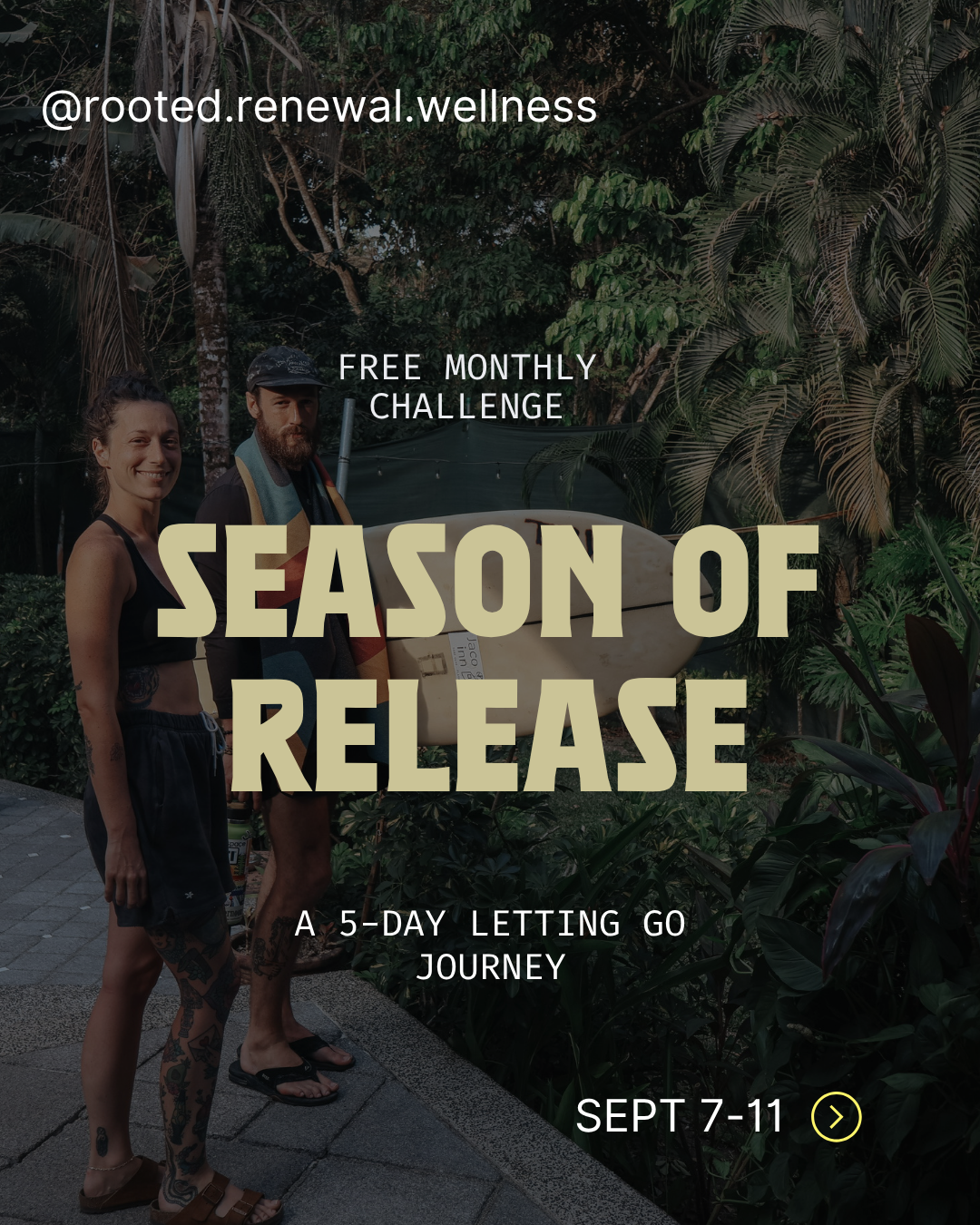
If you’re looking for an easy way to start developing the muscle of self trust and intuition, join us for our next free challenge! We do them monthly, and you don’t have to be on social media to attend. It’s one week worth of free practices designed to do exactly this. In supportive community, and from the comfort of your own home.
Join us for Season of Release: A 5 Day Letting Go Journey