Nourishment Beyond Food: What It Really Means to Feel Supported
When we hear the word nourishment, most of us might immediately think of food (what we eat, how we fuel our bodies, and whether we’re getting enough nutrients). While food is an vital part of caring for ourselves, today we’re talking about nourishment outside of the kitchen.
True nourishment is a holistic practice. It’s about how supported we feel in our bodies, our relationships, our schedules, and our inner lives. It’s what takes us from surviving to thriving so that we can feel steady, resourced, and alive.
This is the heart of holistic nourishment, and it’s one of the key pieces of of whole-person wellness.
Nourishment Beyond Food
Nourishment beyond food asks us a deeper question:
What helps me feel held, sustained, and supported in my life right now?
Sometimes the answer is truly a warm meal. Other times, it’s rest, honest connection with someone you love, a clear boundary you’ve been meaning to express, or the relief of finally understanding what your body has been trying to tell you.
Holistic nourishment recognizes that we are not just physical bodies. We have nervous systems, we are emotional beings, social creatures, and lifelong learners. When one area is depleted, the others feel it too.
Below are four often-overlooked forms of nourishment that are essential to holistic self-care practices and long-term well-being.
1. Rest as Nourishment
The pillar of restoration.
Rest is not a reward you earn after productivity, it is a biological need.
In a culture that glorifies busyness, rest can feel uncomfortable or even unsafe for so many of us. But deep, consistent rest is one of the most powerful forms of nourishment beyond food. It allows the nervous system to downshift, the body to repair, and the mind to find clarity.
Rest can look like:
Quality sleep
Gentle, non-goal-oriented movement like yin yoga
Stillness, pauses, and doing less on purpose
When rest is prioritized, resilience grows naturally. This is why restoration sits at the core of whole-person wellness, it’s the soil everything else grows from.
2. Connection as Nourishment
The pillar of relationship.
Humans are wired for connection. Feeling seen, heard, and understood is a human right.
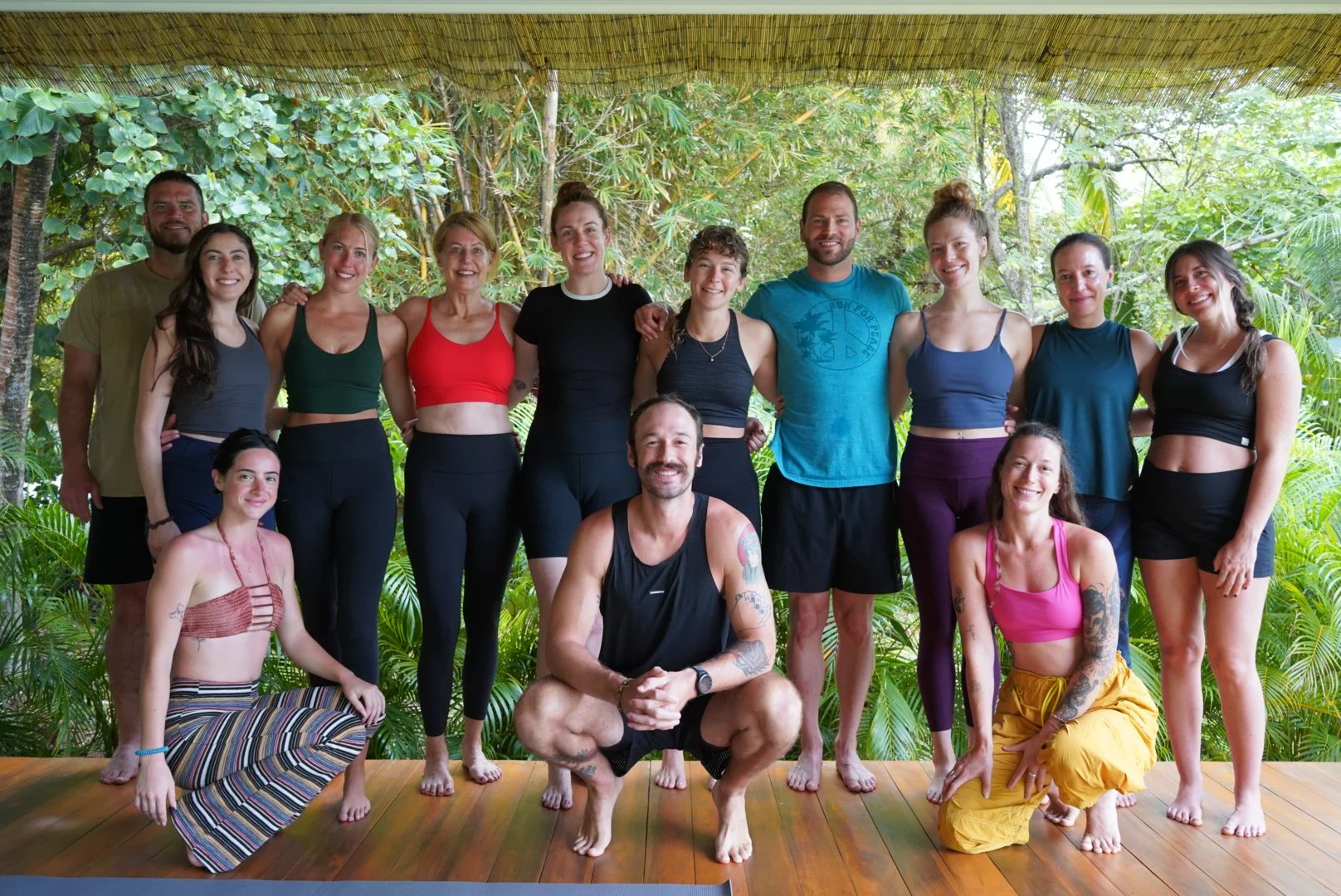
Connection doesn’t have to mean constant socializing. In fact, nourishing connection often feels grounding and regulating rather than draining. We experience this in our retreats through the method of sacred silence. Simply sharing space together.
This could also show up as:
Having honest conversations
Shared silence
Community spaces where you don’t have to perform
Feeling connected to nature or something larger than yourself
When we experience safe connection, our nervous systems soften. We regulate more easily. We remember that we don’t have to do everything alone.
This is nourishment beyond food in its most relational form.
3. Boundaries as Nourishment
The pillar of self-trust.
Boundaries are often misunderstood as rigid or selfish, but in reality, they are deeply nourishing.
Clear boundaries protect your energy, time, and capacity. They allow you to say yes to what truly supports you, and no to what depletes you. Without boundaries, even good things can become overwhelming.
Some examples of boundaries might include:
Limiting overcommitment
Taking breaks from constant input
Saying no without over-explaining
Creating space between stimulus and response
Boundaries are an act of self-respect. They signal to your system that you are paying attention, and that builds trust within yourself.
4. Learning as Nourishment
The pillar of awareness.
Understanding your body, your stress patterns, and your needs is profoundly nourishing.
When you learn why you feel the way you do, shame often softens into compassion. Confusion turns into clarity. You gain tools instead of pushing harder.
Learning as nourishment can include:
Nervous system education
Mindfulness and self-inquiry
Somatic awareness
Reflective practices that help you make sense of your experience
This kind of learning isn’t overwhelming. It empowers us. It supports holistic self-care practices by giving you context, choice, and agency.
A Simple Nourishment Check-In
If nourishment goes beyond food, then checking in needs to go beyond meals too. Try this brief practice:
Pause and ask yourself:
Where do I feel nourished right now?
Where do I feel depleted?
Which form of nourishment do I need most today? Is it rest, connection, boundaries, or learning?
You don’t need to fix everything. Simply noticing is often the first act of care.
Then, choose one small action. Whether that is a nap, a message to a friend, a canceled commitment, or a moment of curiosity toward your body.
That is holistic nourishment in practice.
Coming Back to Support
At its core, nourishment beyond food is about the support that we cultivate both internal and external. It’s about creating conditions where your system can settle, adapt, and thrive.
When we approach wellness through a whole-person lens, we stop asking, “What’s wrong with me?”
And start asking, “What would support me right now?”
That shift changes everything.
Curious about this kind of nourishment? Join our upcoming retreat in Vermont this summer solstice, focused on Ayurvedic Wellness Practices designed to teach us EXACTLY this.